[left-post]
We all have been using the same kind of technique for keyword research and writing articles for a very long time.
The problem is, what we’re doing isn’t 100% effective and we still don’t know it.
Today I’m going to talk about a special term called as Keyword Difficulty Analysis and how to use Keyword Difficulty tool to ease our Keyword Research work.
Before that let me address, the usual way of doing Keyword Research and why you’ve been doing it wrong all the while.
Even if you did rank and later call yourself a pro-blogger by applying above mentioned steps, you have been doing it all wrong ever since.
Why?
Because…
You have been missing a very crucial step in start of your Keyword Research.
That crucial step is Keyword Difficulty Analysis!

Keyword Difficulty takes into account number of things like;
But
What if? You’re trying to rank for keyword like ‘nike running shoes’
It will be very difficult, because most places will taken up by ecommerce sites and high authority blogs which have either reviewed or promoting ‘nike running shoes.’
And when it comes to normal blogs like yours and mine, it would to tough even to book a place in 5th page, isn’t it?
Don’t worry as I will be teaching you how to find keyword difficulty, how to use keyword difficulty tool to do it effectively and never waste your efforts to rank a keyword.
Before that it’s important to know what Strong Results and Weak Results mean.
Consider if you’re in tech niche, you search for ‘iPhone 6 Review’; it’s very obvious that the first 10 results will be taken up high authoritative blogs which are very hard to compete with.

If sites like Wikipedia, Wiki how, Mashable, Techcrunch, Engadget, Macrumors and other established tech sites rank in Top 10, then you should get a hint that it will be very hard to outrank these sites.
Such type of SERP results are called as Strong Results and it’s very hard to compete with them.
Whereas if you search for a long tail keyword as seen in image below and majority results are from forums, amateur/unprofessional YouTube Videos, Yahoo Answers, Quora and similar user-generated or non-relevant sites then it’s fairly easy to outrank them.

The content on these sites is user-generated which usually Google sees as having less authority and trust factor are called as Weak Results.
Now that we’ve talked in brief about Strong & Weak Results and Keyword Difficulty, let us now get into the science of Keyword Difficulty analysis.
I’ve cropped Keyword Difficulty Analysis using specialized Keyword Difficulty tool in three different methods.
Let’s Start!
For bloggers like us, it’s more than just a search engine; it’s a powerful tool that helps us analyse our competition.
Let us see how can we use Google as a Keyword Difficulty tool and analyse competition to rank for a keyword.
Using Google Keyword Planner, I’ve taken a dummy keyword which has fairly good amount of search, low competition and good CPC.
(When Google Keyword Planner shows Low Competition for a keyword, then it usually regarding people advertising for that keyword irrespective of organic results)
The keyword I’ve selected is ‘protein rich food’ which has 8,100 monthly search, Low Competition and CPC for $3.12.
Fire up your Chrome Browser in Incognito Mode and go to Google.com.
(Incognito mode avoids returning personalized results like News, Images, Youtube Videos, Ads and so on which Google displays after collecting our search data and preferences. This helps us get a generic ranking.)
Secondly open up an excel file or Google Spreadsheet and create five columns.
Fill the columns as Keyword, Total Results, Results with allinurl, Results with allintitle and lastly Results with allintext. (Refer image below)

I’ll explain what these terms mean just as we move on.
Now do a basic search (in incognito mode) for the keyword ‘protein rich foods’ and write the total returned results under ‘Total Results’ column in your spreadsheet.

Once you fill the first two column, we’re now going to use special operators to make the best use of Google as a Keyword Difficulty Tool. These special operators are
• ‘allinurl: protein rich foods’, note the number of results containing ‘protein rich foods’ in URL and enter in into the spreadsheet under ‘Results with allinurl’ column.

• ‘allintitle: protein rich foods’, note the number of results containing ‘protein rich foods’ in Title and enter it into the spreadsheet under ‘Results with allintitle’ column.

• ‘allintext: protein rich foods’, note the number of results containing ‘protein rich foods’ inside article and enter it into the spreadsheet under ‘Results with allintext’ column.

At the end your excel spreadsheet is going to look something like this.

You can do the same with your sub-keyword and LSI keywords.
What’s the purpose of our collected data?
According to my experience, keywords with than or nearby ‘Total Results’ of 1,000,000 has good possibility for ranking on the 1st Page.
If ‘Results with allinurl’ and ‘Results with allintitle’ are less than or nearby 1000 then you have high chances of ranking on the 1st page with a 2000+ words in-depth blog post, proper image optimization, High Flesch Reading Score (read point #4), Quick Load Speed, Good Social Shares, Efficient Inter Linking and several high DA, PA Backlinks.
I’d suggest to not try for a keyword where ‘Results with allintext’ is 50% more than the ‘Total Results’. In our case the percentage is 460%, so it’s better to avoid working on this keyword.
To get more information regarding sites that pull up in the Top 10 Results like Domain Authority, Page Authority, Backlinks, PR, Domain Age and so on, I’d suggest you use a Chrome Extension called as SEOQuake.
If you have doubts regarding this technique, do leave a comment below in-case you don’t forget it later.
Moving on to next method i.e. the second Keyword Difficulty Tool.
But if you’re really isn’t that patient let me introduce you to a true Keyword Difficulty tool called as Keyword Inspector.
Keyword Inspector is a free Keyword Difficulty Analysis tool used to analyse difficulty in ranking a keyword.
It is a product of Learn2Rank.com and does keyword difficulty analysis for you.
Once you create an account with Learn2Rank and are logged into Keyword Inspector, follow the steps below to make best use of this Keyword Difficulty Tool.

Keyword Inspector ranks keyword on a base of Very Easy, Easy, Moderate, Difficult and Very Difficult.
As per my experience with this Keyword Difficulty tool, I’d recommend to attempt for keywords with moderate and less difficulty.
Keyword Inspector displays the Top 10 results ranking on Google for that keyword and displays average Links/Page, average URL Pagerank, Average Moz Rank, Competition Score and Difficulty.
If your chosen keyword has score 40 and less then it will be easy to rank for it.
Do take this tool’s results with a pinch of salt because for a keyword if it shows Very Difficult to Rank in USA, might show Very Easy to rank in India due to different demography and people’s needs.
If you have any questions or doubts regarding this Keyword Difficulty Tool then leave a comment below before you forget and later continue reading ahead.
Moving on to Method 3…
In short if you’re SEO noob who’s a house-wife mommy or a corporate tie-hauling worker and just don’t need the hangover of huge details of SEO mumbo-jumbo required to rank a keyword, if you don’t have the time to check each and every keyword slowly and steadily and just want to drop all your main keyword, sub keyword and LSI keywords and do Keyword Difficulty Analysis, this next tool is perfect for you.
The tool I’m talking about is a professional SEO tool for digital marketers called as SEMrush.
SEMRUSH recently introduced a new Keyword Difficulty Tool to bulk check difficulty in ranking multiple keywords.
Once you’re registered into SEMRUSH using its 14-day FREE Trial Period, see the Left Panel in SEMRUSH dashboard and look for Tools.
Under Tools you’ll have Keyword Difficulty Tool.
Click on it and you can enter maximum of 100 keywords per line and search their Keyword Difficulty.
The tool will display your difficulty in ranking a keyword and grade it based on percentage.
In our case, the keyword we’ve chosen has monthly volume of 8,100 and 85% Difficulty which means the keyword is very hard to rank.

In SEMRUSH Keyword Difficulty tool, keywords which have 60% or less competition can be ranked for 1st page of Google.
If you’re a Professional Digital Marketer or an Amateur Blogger, I’d recommend you using SEMrush as it is a Swiss Army Knife for Bloggers, Internet and Affiliate Marketer.
It helps me do 4-jobs-in-1 i.e. find Keyword Difficulty, Keyword Research, Competitors Analysis and helps finding Backlink Opportunities. You may want to read complete SEMrush review.
If you really want to save the trouble from jumping one tool to another for your SEO needs, SEMRUSH is just for you.
I believe this 3rd Method isn’t as complicated as the above two. Still if you have any doubts regarding this tool, do let me know in the comments section.
I believe I was able to put forward a very new and exciting topic in front of you.
Finding Keyword Difficulty for your potential keywords you want to rank for helps you determine which keyword can be actually ranked if you’re a normal blogger just like me.
I do have invested a lot of time to put forth an informative and detailed post in front of you, so even if you did understood everything, I’d request you to leave a comment below regarding the article.
Let me know if you use some other techniques different or similar than mine for analysing competition for your potential keywords.
We all have been using the same kind of technique for keyword research and writing articles for a very long time.
The problem is, what we’re doing isn’t 100% effective and we still don’t know it.
Today I’m going to talk about a special term called as Keyword Difficulty Analysis and how to use Keyword Difficulty tool to ease our Keyword Research work.
Before that let me address, the usual way of doing Keyword Research and why you’ve been doing it wrong all the while.
- Keyword Research for High Volume, Low Competition and Good CPC Keyword.
- Search for effective LSI (Latent Semantic Index) keywords.
- Write articles with keyword in Title, URL, Meta Description, Image Alt Tags, Set Keyword Density to over 1% and sprinkle some LSI keywords.
- Share article on social networks like Facebook, Twitter, Google+, Reddit, StumbleUpon, and every other popular social network.
- Initiate proper interlinking, build backlinks via dofollow comments, Guest Post and other personalized techniques.
- Later pray for article to rank.
Even if you did rank and later call yourself a pro-blogger by applying above mentioned steps, you have been doing it all wrong ever since.
Why?
Because…
You have been missing a very crucial step in start of your Keyword Research.
That crucial step is Keyword Difficulty Analysis!
What does Keyword Difficulty Analysis mean?
Keyword Difficulty takes into account number of things like;
- How many pages are currently ranking for a Particular Keyword?
- How many pages are Bidding in that Keyword in Paid Search (PPC Campaign)?
- How expensive are the clicks? and volume for that term in a month.
In layman’s term, Keyword Difficulty means…“It is a factor that tells us how easy or difficult it is to rank for a particular keyword.”
For example if you’re trying to rank for keyword like ‘best dog food for chihuahua in Arizona’ then even with couple of internal links you’ll be able to rank as its highly personalized and local search.But
What if? You’re trying to rank for keyword like ‘nike running shoes’
It will be very difficult, because most places will taken up by ecommerce sites and high authority blogs which have either reviewed or promoting ‘nike running shoes.’
And when it comes to normal blogs like yours and mine, it would to tough even to book a place in 5th page, isn’t it?
Don’t worry as I will be teaching you how to find keyword difficulty, how to use keyword difficulty tool to do it effectively and never waste your efforts to rank a keyword.
Before that it’s important to know what Strong Results and Weak Results mean.
Consider if you’re in tech niche, you search for ‘iPhone 6 Review’; it’s very obvious that the first 10 results will be taken up high authoritative blogs which are very hard to compete with.
If sites like Wikipedia, Wiki how, Mashable, Techcrunch, Engadget, Macrumors and other established tech sites rank in Top 10, then you should get a hint that it will be very hard to outrank these sites.
Such type of SERP results are called as Strong Results and it’s very hard to compete with them.
Whereas if you search for a long tail keyword as seen in image below and majority results are from forums, amateur/unprofessional YouTube Videos, Yahoo Answers, Quora and similar user-generated or non-relevant sites then it’s fairly easy to outrank them.
The content on these sites is user-generated which usually Google sees as having less authority and trust factor are called as Weak Results.
Now that we’ve talked in brief about Strong & Weak Results and Keyword Difficulty, let us now get into the science of Keyword Difficulty analysis.
I’ve cropped Keyword Difficulty Analysis using specialized Keyword Difficulty tool in three different methods.
Let’s Start!
Method 1 – Using Special Google Operators for Keyword Difficulty Analysis
For normal consumers and information seekers Google is just a gateway or a simple input field where they type-in queries and search for what they want.For bloggers like us, it’s more than just a search engine; it’s a powerful tool that helps us analyse our competition.
Let us see how can we use Google as a Keyword Difficulty tool and analyse competition to rank for a keyword.
Using Google Keyword Planner, I’ve taken a dummy keyword which has fairly good amount of search, low competition and good CPC.
(When Google Keyword Planner shows Low Competition for a keyword, then it usually regarding people advertising for that keyword irrespective of organic results)
The keyword I’ve selected is ‘protein rich food’ which has 8,100 monthly search, Low Competition and CPC for $3.12.
Fire up your Chrome Browser in Incognito Mode and go to Google.com.
(Incognito mode avoids returning personalized results like News, Images, Youtube Videos, Ads and so on which Google displays after collecting our search data and preferences. This helps us get a generic ranking.)
Secondly open up an excel file or Google Spreadsheet and create five columns.
Fill the columns as Keyword, Total Results, Results with allinurl, Results with allintitle and lastly Results with allintext. (Refer image below)
I’ll explain what these terms mean just as we move on.
Now do a basic search (in incognito mode) for the keyword ‘protein rich foods’ and write the total returned results under ‘Total Results’ column in your spreadsheet.
Once you fill the first two column, we’re now going to use special operators to make the best use of Google as a Keyword Difficulty Tool. These special operators are
- allinurl – Displays all results with keyword appearing in URL.
- allintitle – Displays all results with keyword appearing in Title.
- allintext – Displays all results with keyword appearing inside the article.
• ‘allinurl: protein rich foods’, note the number of results containing ‘protein rich foods’ in URL and enter in into the spreadsheet under ‘Results with allinurl’ column.
• ‘allintitle: protein rich foods’, note the number of results containing ‘protein rich foods’ in Title and enter it into the spreadsheet under ‘Results with allintitle’ column.
• ‘allintext: protein rich foods’, note the number of results containing ‘protein rich foods’ inside article and enter it into the spreadsheet under ‘Results with allintext’ column.
At the end your excel spreadsheet is going to look something like this.
You can do the same with your sub-keyword and LSI keywords.
What’s the purpose of our collected data?
According to my experience, keywords with than or nearby ‘Total Results’ of 1,000,000 has good possibility for ranking on the 1st Page.
If ‘Results with allinurl’ and ‘Results with allintitle’ are less than or nearby 1000 then you have high chances of ranking on the 1st page with a 2000+ words in-depth blog post, proper image optimization, High Flesch Reading Score (read point #4), Quick Load Speed, Good Social Shares, Efficient Inter Linking and several high DA, PA Backlinks.
I’d suggest to not try for a keyword where ‘Results with allintext’ is 50% more than the ‘Total Results’. In our case the percentage is 460%, so it’s better to avoid working on this keyword.
To get more information regarding sites that pull up in the Top 10 Results like Domain Authority, Page Authority, Backlinks, PR, Domain Age and so on, I’d suggest you use a Chrome Extension called as SEOQuake.
If you have doubts regarding this technique, do leave a comment below in-case you don’t forget it later.
Moving on to next method i.e. the second Keyword Difficulty Tool.
Method 2: Using a specialized Keyword Difficulty Checker
I usually prefer the first method as I personally get to know the look and feel of my competition, visit the blog posts and see what each author has to say about a particular topic.But if you’re really isn’t that patient let me introduce you to a true Keyword Difficulty tool called as Keyword Inspector.
Keyword Inspector is a free Keyword Difficulty Analysis tool used to analyse difficulty in ranking a keyword.
It is a product of Learn2Rank.com and does keyword difficulty analysis for you.
Once you create an account with Learn2Rank and are logged into Keyword Inspector, follow the steps below to make best use of this Keyword Difficulty Tool.
- Put your keyword in the input box (in our case ‘protein rich foods’) and select the country.
- Search results differ intensively depending on your country you’re targeting. Google usually ranks ecommerce sites, blogs, and websites within or closely related to that country.
- Once you’re done, click on Submit and let Keyword Inspector do rest of the work for you.
- In the screenshot below, Keyword Inspector shows that it is VERY DIFFICULT to rank for our chosen keyword, so it’s better to not even looking at it.
Keyword Inspector ranks keyword on a base of Very Easy, Easy, Moderate, Difficult and Very Difficult.
As per my experience with this Keyword Difficulty tool, I’d recommend to attempt for keywords with moderate and less difficulty.
Keyword Inspector displays the Top 10 results ranking on Google for that keyword and displays average Links/Page, average URL Pagerank, Average Moz Rank, Competition Score and Difficulty.
If your chosen keyword has score 40 and less then it will be easy to rank for it.
Do take this tool’s results with a pinch of salt because for a keyword if it shows Very Difficult to Rank in USA, might show Very Easy to rank in India due to different demography and people’s needs.
If you have any questions or doubts regarding this Keyword Difficulty Tool then leave a comment below before you forget and later continue reading ahead.
Moving on to Method 3…
Method 3: Keyword Difficulty tool for Mommy’s and Daddy’s as well as for Pro Digital Marketers
Well if you don’t want to go the extra distance for Keyword Difficulty Analysis or supposedly not interested in knowing the extra details.In short if you’re SEO noob who’s a house-wife mommy or a corporate tie-hauling worker and just don’t need the hangover of huge details of SEO mumbo-jumbo required to rank a keyword, if you don’t have the time to check each and every keyword slowly and steadily and just want to drop all your main keyword, sub keyword and LSI keywords and do Keyword Difficulty Analysis, this next tool is perfect for you.
The tool I’m talking about is a professional SEO tool for digital marketers called as SEMrush.
SEMRUSH recently introduced a new Keyword Difficulty Tool to bulk check difficulty in ranking multiple keywords.
Once you’re registered into SEMRUSH using its 14-day FREE Trial Period, see the Left Panel in SEMRUSH dashboard and look for Tools.
Under Tools you’ll have Keyword Difficulty Tool.
Click on it and you can enter maximum of 100 keywords per line and search their Keyword Difficulty.
The tool will display your difficulty in ranking a keyword and grade it based on percentage.
In our case, the keyword we’ve chosen has monthly volume of 8,100 and 85% Difficulty which means the keyword is very hard to rank.
In SEMRUSH Keyword Difficulty tool, keywords which have 60% or less competition can be ranked for 1st page of Google.
If you’re a Professional Digital Marketer or an Amateur Blogger, I’d recommend you using SEMrush as it is a Swiss Army Knife for Bloggers, Internet and Affiliate Marketer.
It helps me do 4-jobs-in-1 i.e. find Keyword Difficulty, Keyword Research, Competitors Analysis and helps finding Backlink Opportunities. You may want to read complete SEMrush review.
If you really want to save the trouble from jumping one tool to another for your SEO needs, SEMRUSH is just for you.
I believe this 3rd Method isn’t as complicated as the above two. Still if you have any doubts regarding this tool, do let me know in the comments section.
I believe I was able to put forward a very new and exciting topic in front of you.
Finding Keyword Difficulty for your potential keywords you want to rank for helps you determine which keyword can be actually ranked if you’re a normal blogger just like me.
I do have invested a lot of time to put forth an informative and detailed post in front of you, so even if you did understood everything, I’d request you to leave a comment below regarding the article.
Let me know if you use some other techniques different or similar than mine for analysing competition for your potential keywords.
 The
big question that every business owner asks is how to get ranked number
1 in Google for their keywords. I could answer that question in a
simple manner, but it would be vague and leave you frustrated. So, this
explanation is going to be a bit long. Pay close attention and take
notes, because this is accurate information that really works.
The
big question that every business owner asks is how to get ranked number
1 in Google for their keywords. I could answer that question in a
simple manner, but it would be vague and leave you frustrated. So, this
explanation is going to be a bit long. Pay close attention and take
notes, because this is accurate information that really works. What
I can tell you is that I do understand the most important factors for
getting a page to rank high right now. There are a handful of critical
factors and then there are many other less critical ones. I will share a
few of the more critical factors. I learned these factors after
studying the academic papers published by the top people at Google and
through years of trial, error and experience.
What
I can tell you is that I do understand the most important factors for
getting a page to rank high right now. There are a handful of critical
factors and then there are many other less critical ones. I will share a
few of the more critical factors. I learned these factors after
studying the academic papers published by the top people at Google and
through years of trial, error and experience. 1) Page Title
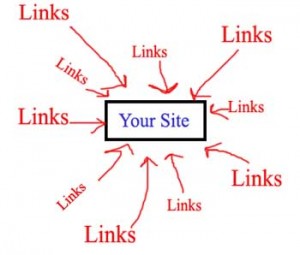 About links –
 EEEEEEEEEEEEEEENT! (Sound of a buzzer going off)
 The
other thing that you are going to have to learn how to do in order to
achieve a number one ranking is learn how to analyze your competition.
If some other page is outranking you, it will be easier to outrank them
if you understand why they are ranking as high as they are. They are
ranking number one for a reason.
The
other thing that you are going to have to learn how to do in order to
achieve a number one ranking is learn how to analyze your competition.
If some other page is outranking you, it will be easier to outrank them
if you understand why they are ranking as high as they are. They are
ranking number one for a reason. 1) Start by getting your page title right.
If you are targeting a four word long or longer phrase, then make that
phrase your page title exactly. That is the easiest way to convey
maximum relevancy.
1) Start by getting your page title right.
If you are targeting a four word long or longer phrase, then make that
phrase your page title exactly. That is the easiest way to convey
maximum relevancy.